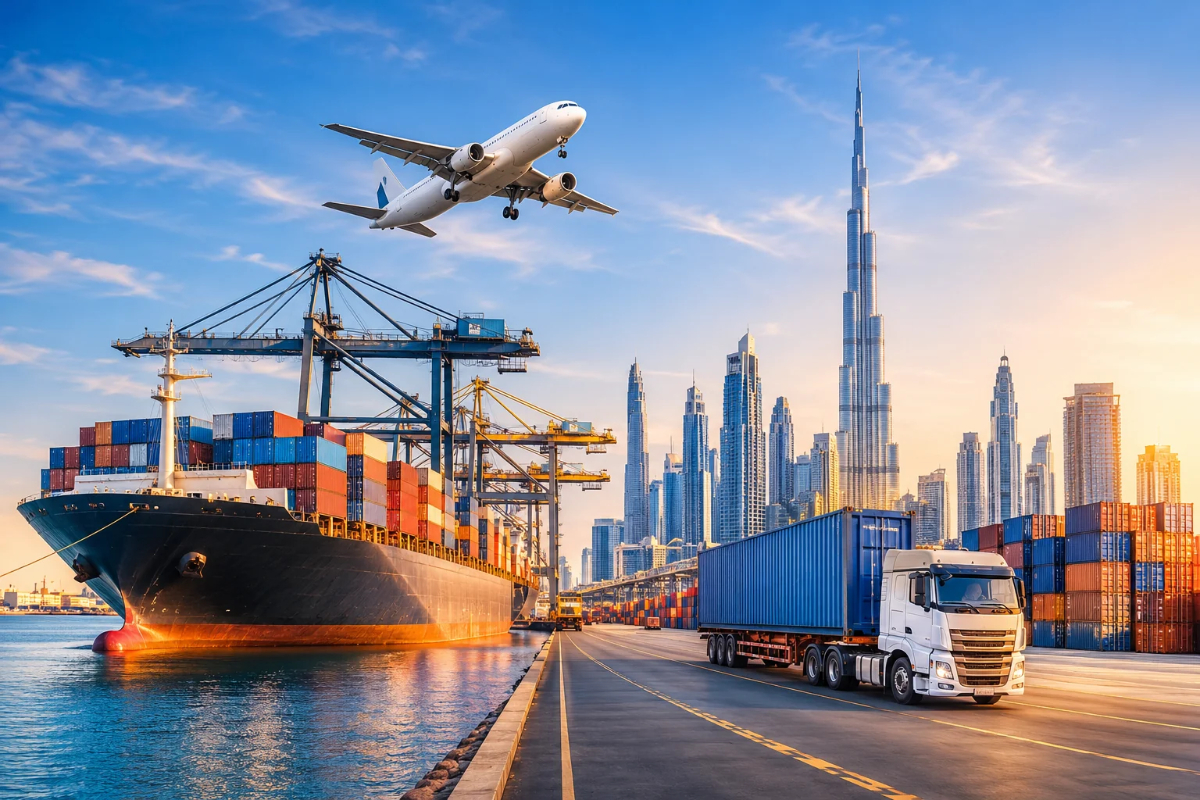
UAE's Growing Role as a Global Logistics and Trade Hub
The UAE has become one of the most important gateways for international trade, connecting businesses across Asia, Europe, Africa, and the Middle East.
Its strategic location, modern ports, advanced airports, road networks, and business-friendly environment make it an attractive destination for companies looking to expand their global supply chains.
For importers, exporters, and manufacturers, the UAE offers more than a transit point.
It provides opportunities to store goods, distribute cargo across regional markets, manage international shipments, and improve supply chain efficiency.
As global trade continues to evolve, the UAE's growing role as a global logistics and trade hub is creating new possibilities for businesses of all sizes.
Why the UAE Is a Strategic Global Trade Hub
The UAE's geographical position is one of its greatest advantages.
Located between major markets in Asia, Europe, and Africa, the country allows businesses to reach multiple destinations through well-connected transport networks.
Dubai and Abu Dhabi have developed strong logistics infrastructure that supports international cargo movement.
Ports, airports, free zones, warehousing facilities, and road connections work together to support different supply chain requirements.
This connectivity helps businesses manage international freight, serve regional customers, and explore new markets without establishing separate operations in every destination.
Key Factors Driving UAE's Logistics Growth
- Strategic Location and Global Connectivity
The UAE is positioned along major international trade routes, making it an important link between manufacturing centres, consumer markets, and distribution networks.
Businesses importing goods from Asia can use the UAE as a regional distribution point for markets across the Middle East, Africa, and beyond.
Similarly, exporters can use its connectivity to access international buyers through air, sea, and road transportation.
This geographical advantage supports better connections between origins and destinations while offering businesses greater flexibility in planning their logistics operations.
- World-Class Ports and Airport Infrastructure
The UAE's ports and airports play a major role in international trade.
Jebel Ali Port is one of the region's major maritime gateways, supporting imports, exports, transshipment, and regional distribution.
Its connectivity to international shipping networks allows freight forwarders and businesses to coordinate cargo movements across multiple destinations.
Air cargo infrastructure also supports time-sensitive shipments, including pharmaceuticals, electronics, high-value goods, urgent spare parts, and other cargo that requires faster transportation.
Together, sea and air connectivity provide businesses with multiple options to balance cost, speed, and cargo requirements.
- Free Zones and Business-Friendly Environment
The UAE's free zones attract international companies involved in trading, manufacturing, logistics, and distribution.
These zones provide business infrastructure and operating frameworks designed to support international commercial activities.
Logistics facilities in free zones can help businesses manage inventory, consolidate shipments, re-export cargo, and serve different regional markets.
For companies handling multiple shipments, warehousing and distribution facilities in the UAE can also provide greater control over stock management and delivery planning.
- Strong Road Freight Connectivity Across the GCC
Road freight is another important part of the UAE's logistics ecosystem.
Road networks connect the UAE with neighbouring GCC countries, supporting cross-border cargo movement and regional distribution.
For businesses shipping goods between the UAE, Saudi Arabia, Oman, Kuwait, Bahrain, and Qatar, road transportation can provide a practical option for moving commercial cargo.
Depending on the cargo, route, border requirements, and delivery schedule, businesses can choose full truckload (FTL) or less-than-truckload (LTL) services.
These options are particularly useful for retail goods, industrial equipment, project materials, and shipments that require flexible delivery arrangements.
How the UAE Supports International Supply Chains
The UAE's logistics infrastructure enables businesses to manage different stages of their supply chain from one location.
Warehousing and Distribution
Warehousing allows companies to store goods closer to their customers and manage inventory before final delivery.
Businesses can use storage facilities for short-term holding, long-term storage, cargo consolidation, packing, labelling, and distribution.
For example, an importer receiving goods from multiple suppliers in Asia may bring shipments into the UAE, consolidate them at a warehouse, and distribute them to customers across the GCC.
This approach can improve inventory planning and reduce the need to move smaller shipments separately.
Multimodal Transportation
Multimodal transportation combines two or more modes of transport, such as sea, air, and road, to move cargo from origin to destination.
The UAE's connectivity makes multimodal logistics a valuable option for businesses handling international shipments.
Cargo may arrive by sea, move through a warehouse for handling or consolidation, and then continue by road to its final destination.
Choosing the right combination of transportation modes can help businesses balance transit time, freight costs, and operational requirements.
Opportunities for Importers, Exporters, and Manufacturers
The UAE's expanding logistics sector offers several opportunities for businesses.
- Market expansion: Access regional and international markets through established trade connections.
- Inventory management: Store goods closer to customers and manage stock more efficiently.
- Flexible shipping: Choose Sea freight, Air freight, Road freight, or Multimodal solutions depending on shipment requirements.
- Cargo consolidation: Combine smaller shipments to optimise transportation and handling costs.
- Regional distribution: Use the UAE as a logistics base for supplying multiple destinations.
- Supply chain planning: Coordinate cargo handling, customs processes, storage, and onward delivery through a structured logistics plan.
For manufacturers, these advantages can support the movement of raw materials, production equipment, spare parts, and finished goods.
For trading companies, they can help manage sourcing, stock availability, and regional customer deliveries.
Challenges Businesses Should Consider
Although the UAE offers strong logistics advantages, businesses must still plan carefully to avoid unnecessary costs and shipment delays.
Freight Costs and Cargo Handling
Freight costs can vary depending on cargo dimensions, weight, origin, destination, transport mode, and market conditions.
Additional expenses may include customs clearance, storage, port handling, documentation, delivery, and other service charges.
Businesses should request detailed freight quotations and understand which services are included before confirming a shipment.
Customs Documentation and Compliance
International shipments require accurate documentation. Incorrect commercial invoices, packing lists, product descriptions, customs declarations, or missing permits can lead to clearance delays and additional expenses.
Importers and exporters should understand the requirements of the cargo, destination country, and applicable customs procedures before dispatch.
Supply Chain Coordination
Cargo movement often involves several parties, including suppliers, shipping lines, airlines, freight forwarders, customs brokers, warehouses, and transport providers.
Poor coordination between these parties can result in missed connections, delayed deliveries, or unexpected storage charges.
Working with a logistics partner that maintains clear communication and shipment visibility can help businesses manage these challenges.
How Businesses Can Make the Most of the UAE Logistics Hub
Companies looking to use the UAE as a logistics base should take a strategic approach rather than focusing only on freight rates.
- Plan shipments in advance: Early booking can help businesses manage cargo schedules and reduce last-minute pressure.
- Choose the right transport mode: Compare Sea, Air, and Road freight based on urgency, budget, cargo type, and destination.
- Explore warehousing options: Consider UAE storage and distribution facilities when managing regional inventory or multiple deliveries.
- Understand the full shipping cost: Check freight, handling, customs clearance, storage, and final delivery charges.
- Work with reliable logistics partners: Choose freight forwarders with suitable network coverage, cargo expertise, and clear communication.
- Prepare accurate documents: Ensure shipping paperwork is complete and consistent to reduce avoidable clearance issues.
- Review your supply chain regularly: Evaluate routes, shipment frequency, cargo volumes, and distribution requirements as your business grows.
These steps can help companies use the UAE's logistics infrastructure more effectively while maintaining better control over their shipping operations.
The Future of the UAE's Logistics and Trade Industry
The UAE is continuing to strengthen its position in global trade through infrastructure development, digital transformation, international trade partnerships, and logistics investment.
Dubai's integrated logistics ecosystem connects ports, free zones, airports, and road networks, while Abu Dhabi continues developing its transport infrastructure and trade services.
These developments support businesses seeking more connected supply chains and access to international markets.
The future of logistics will also depend on technology, data visibility, automation, sustainability, and the ability to respond to changing trade conditions.
Businesses will increasingly need logistics partners who can offer more than transportation, including cargo planning, warehousing, documentation coordination, and reliable communication throughout the shipment process.
As trade routes and business requirements evolve, the UAE is well positioned to remain a major gateway for global commerce and regional distribution.
The UAE's growing role as a global logistics and trade hub is driven by its strategic location, modern transport infrastructure, international connectivity, free zones, and expanding logistics capabilities.
These advantages create opportunities for importers, exporters, manufacturers, and trading companies to strengthen their supply chains and reach new markets.
However, making the most of this hub requires careful planning, the right transportation choices, accurate documentation, and reliable logistics coordination.
At Azimar Shipping, we support businesses with freight forwarding, sea freight, air freight, land transportation, warehousing, cargo consolidation, and logistics coordination.
Whether moving cargo into the UAE, exporting from the region, or planning onward distribution, the right logistics approach can make a meaningful difference.
Looking to move cargo through the UAE or expand your regional distribution network?
Contact Azimar Shipping to discuss a logistics solution suited to your cargo, route, and business requirements.
Mail Us: info@azimarshipping.com
For Free Quote! Click here
Azimar Shipping – Your partner in logistics